
Timber company access permit
Annual, per permit
Sold by the landholder, often in limited numbers with vehicle-access tiers. The closest thing Washington has to a lease market.
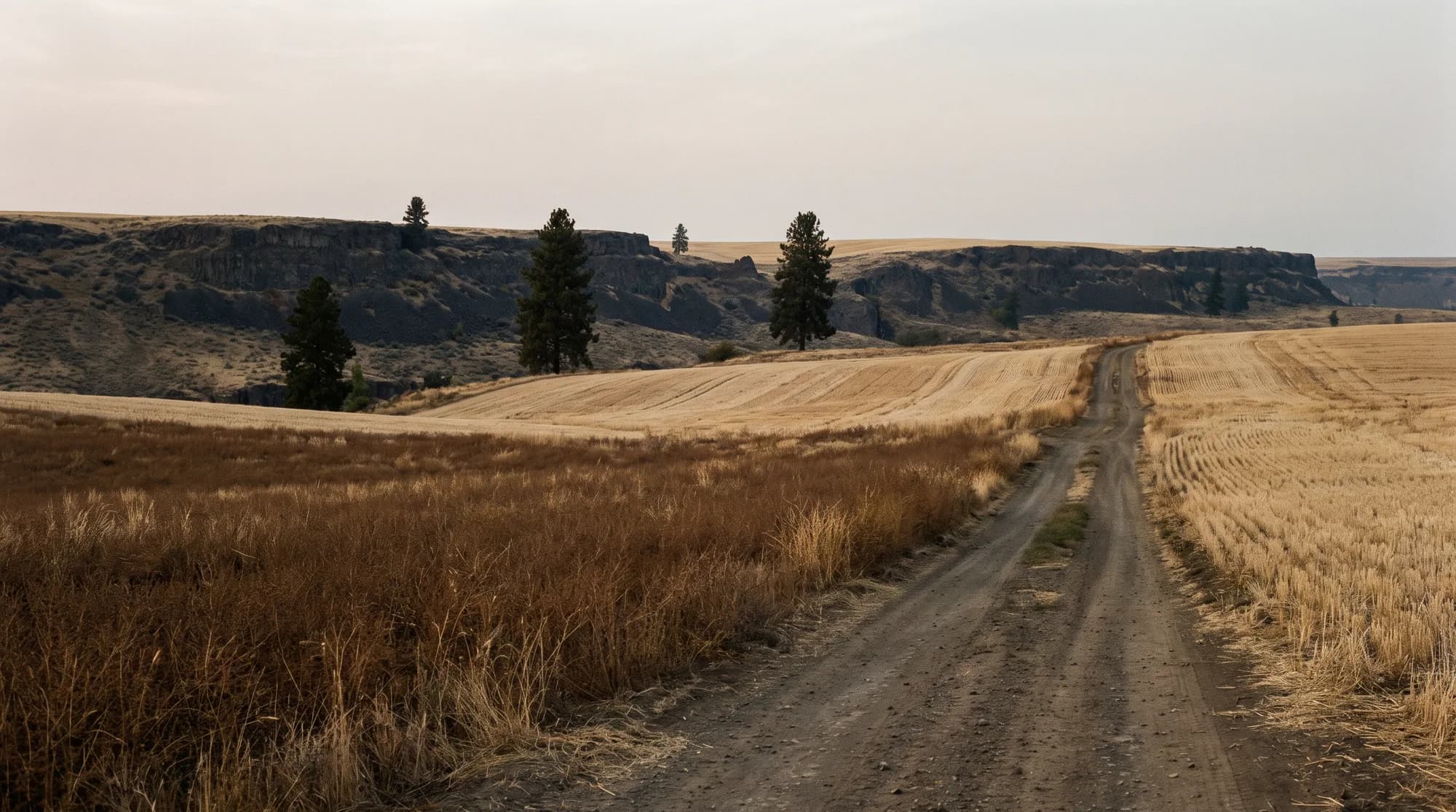
Reference only · Washington
Washington is the western state whose access market most resembles the Southeast, because the dominant private landholding is industrial timber rather than ranch. Large timber companies control enormous acreages and sell access by permit, while the state runs a set of programs that open other private ground to public hunting under defined terms.
Status
Not a launch region
Reference only
Dominant holding
Industrial timber
Access sold by permit
State programs
Several
Written permission, register to hunt
Closest analogue
The Southeast
Timber-lease economics
Reference only
Washington is not a launch region. Its access picture is dominated by industrial timber permits rather than landowner tags, which makes it the western state most like the Southeast.
Access reality
Before anything about a platform — this is the market as it exists today.
What it costs
Published 2026 market guidance, so a landowner can sanity-check what their ground is worth and a hunter can budget honestly. These are market figures, not HunterPass quotes.
Timber company access permit
Annual, per permit
Sold by the landholder, often in limited numbers with vehicle-access tiers. The closest thing Washington has to a lease market.
State access programs
Free to the hunter
Private ground opened under defined terms, with the landowner working through the state rather than negotiating individually.
Agricultural land, eastern Washington
Negotiated
Dryland wheat and adjacent breaks, leased or permitted for deer, upland birds, and waterfowl.
Guided hunts
Outfitter-set
A smaller guided economy than the Rockies, concentrated on specific species and units.
Season framework
The shape of the season, not the dates. Western seasons are set unit by unit and hunt code by hunt code, and publishing a plausible-looking date somebody plans a trip around would be worse than publishing none.
| Season | Window | Note |
|---|---|---|
| Elk | Autumn, by weapon and unit | Separate archery, muzzleloader, modern |
| Deer | Autumn, by weapon and unit | Blacktail, mule deer, whitetail |
| Upland birds | Autumn into winter | — |
| Waterfowl | Federal framework | Strong coastal and Columbia Basin hunting |
Washington separates seasons by weapon type and game management unit, and the split between eastern and western Washington is substantial. WDFW publishes the current regulations.
Washington Department of Fish and WildlifeWhat you have to plan around
Not an exhaustive regulatory summary — the four things that most often catch out a club, a landowner, or a traveling hunter.
Access to industrial timber ground is a permit product with its own terms, seasons, and vehicle rules. It behaves far more like a Southeastern lease program than like a western landowner-tag system.
Written-permission, open-access, and register-on-arrival programs impose different obligations on both landowner and hunter. Assuming one set of rules applies everywhere is the common mistake.
The Cascades divide Washington into two hunting economies. Ground, species, and access terms all change at the crest, and a summary that averages them is useless to anyone.
Archery, muzzleloader, and modern firearm seasons are separate and unit-specific, and a license is generally tied to a weapon choice. Confirm before planning.
Nothing on this page is legal advice or a substitute for current regulations. License requirements, season dates, and carcass-transport rules change every year and vary by unit — Washington Department of Fish and Wildlife is the source of truth.
What you can hunt
Washington questions
By buying an access permit from the landholder. Large timber companies sell recreational access, often annually and in limited numbers, sometimes with tiers for vehicle access. It is the closest thing Washington has to a lease market and the single largest source of private-land hunting in the state.
Not in the same transferable-authorization sense. Washington's landowner-facing programs are oriented around access and wildlife-damage management rather than around issuing tradeable tags. If landowner tags are what you are comparing, Utah, New Mexico, Oregon, Wyoming, and Colorado are the states to look at.
No. Washington is not a launch region. It is included because its timber-permit market is structurally close to the Southeast lease economy we are building for, which makes it a plausible later region.
Other launch states
Reference only
Landowners and clubs are contacted within a day. Hunters hear from us when the region actually opens — and not before.