
Block Management
Free to the hunter
The landowner is compensated by the state rather than by the hunter. No lease, no fee, and a permission system the landowner does not administer.
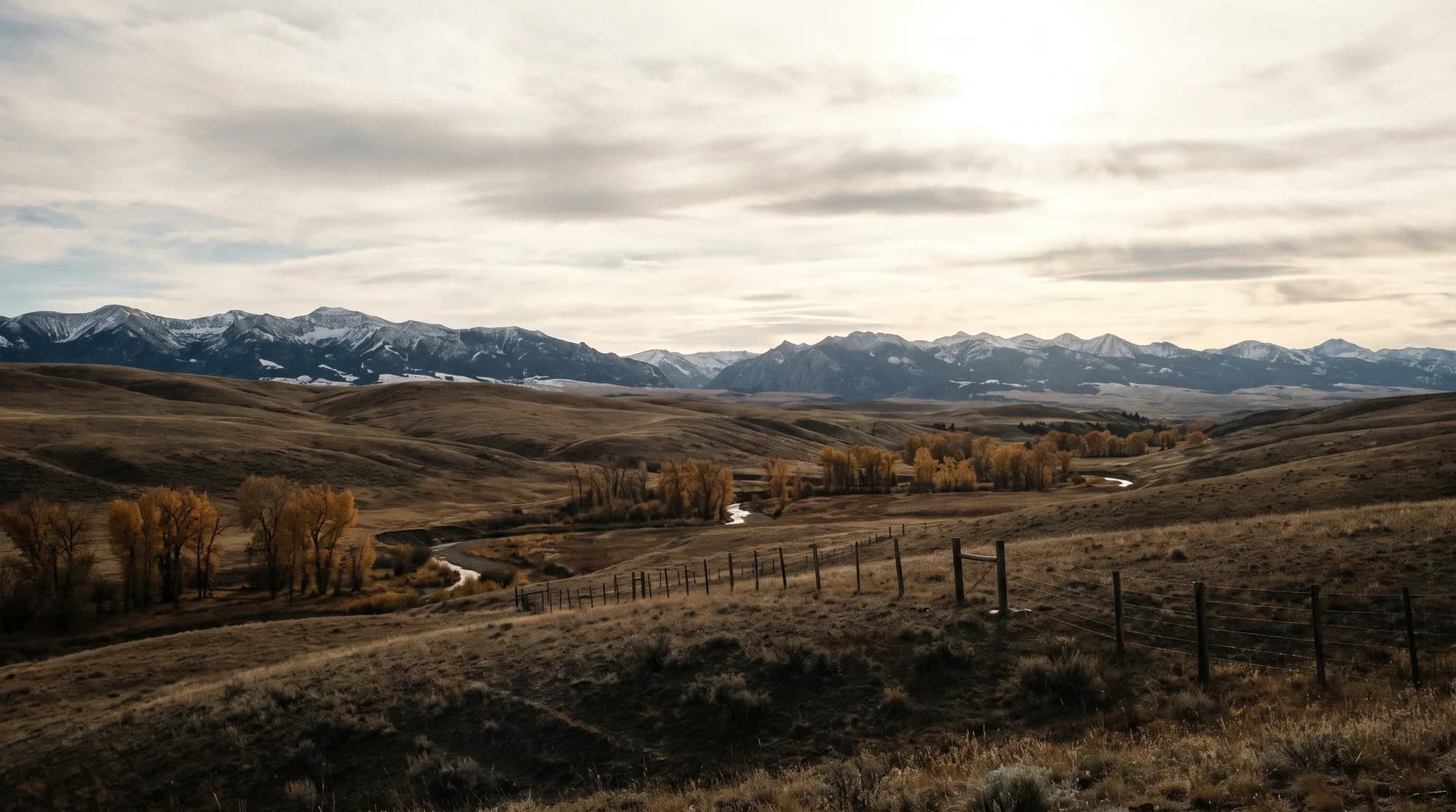
Reference only · Montana
Montana runs the largest public-access-on-private-land program in the country, and it works. Block Management opens roughly 6.8 million acres of private ground to hunters at no charge, paid for by the state. It is also the clearest proof of our own argument: landowners are not withholding access out of hostility. They withhold it because managing who is on the place is work, and Block Management is the state doing that work for them.
Status
Not a launch region
Reference only
Block Management
~6.8M acres
Private land, free to hunt
Nonresident base license
$100
Raised to fund access
Nonresident deer tags
Capped
Cut for 2026–27
Reference only
Montana is not a launch region. It is on this map because Block Management already proves the thing we argue — that landowners will open ground when the administration around it is handled by somebody else.
Access reality
Before anything about a platform — this is the market as it exists today.
What it costs
Published 2026 market guidance, so a landowner can sanity-check what their ground is worth and a hunter can budget honestly. These are market figures, not HunterPass quotes.
Block Management
Free to the hunter
The landowner is compensated by the state rather than by the hunter. No lease, no fee, and a permission system the landowner does not administer.
Private ranch lease
Negotiated per ranch
Priced on tag quality, unit, and animal rather than on a per-acre table. Two neighboring ranches in different districts can be worth very different money.
Fully guided, per hunter per day
~$700
A common Montana rate for multi-day rifle hunts, with one-on-one guiding at a premium above it.
Guided elk, package
$5,000 – $12,000
The western range generally: drop camps at the bottom, guided private ground and trophy units at the top.
Season framework
The shape of the season, not the dates. Western seasons are set unit by unit and hunt code by hunt code, and publishing a plausible-looking date somebody plans a trip around would be worse than publishing none.
| Season | Window | Note |
|---|---|---|
| Elk & deer · Archery | Early autumn | Before the general season |
| Elk & deer · General rifle | Late October into late November | Five weeks, covering the rut |
| Antelope | Autumn | Largely limited-draw |
| Upland & waterfowl | Autumn into winter | Waterfowl on the federal framework |
Montana sets dates annually and they vary by hunting district and license type. The windows above describe the shape of the season, not the dates — Montana Fish, Wildlife & Parks publishes the current regulations, and nonresident allocations for 2026–27 are actively changing.
Montana Fish, Wildlife & ParksWhat you have to plan around
Not an exhaustive regulatory summary — the four things that most often catch out a club, a landowner, or a traveling hunter.
Enrolled landowners are compensated by Montana FWP and the permission system is run by the state. A landowner considering it is choosing between state compensation with no administration and a private lease with more money and more work.
Montana licenses outfitters through its Board of Outfitters, and guides work under a licensed outfitter. Facilitating a guided hunt brings that regime into scope for whoever arranges it.
The commission voted to reduce nonresident deer tags for 2026 and 2027, capping nonresident general deer licenses at half the previous number. Anyone planning a nonresident Montana hunt should confirm allocation before budgeting for it.
Montana has CWD-positive areas with sampling requests and carcass-transport restrictions that are revised between seasons.
Nothing on this page is legal advice or a substitute for current regulations. License requirements, season dates, and carcass-transport rules change every year and vary by unit — Montana Fish, Wildlife & Parks is the source of truth.
What you can hunt
Montana questions
A Montana program that compensates private landowners for allowing public hunting access, with the state running the permission system rather than the landowner. It covers roughly 6.8 million acres of private land, free to the hunter. It is the largest program of its kind in the country and the reason Montana access looks unlike anywhere in the Southeast.
Montana operates landowner preference for certain licenses, with acreage and ownership requirements set by the state and revised periodically. Because the rules and the allocations change, check the current Montana FWP regulations rather than relying on any third-party summary — including this one.
No. Montana is not a launch region and we have no ground there. This page is reference material. If you own or manage Montana ground and want to be told when that changes, the form at the bottom is the honest way to do it.
Other launch states
Reference only
Landowners and clubs are contacted within a day. Hunters hear from us when the region actually opens — and not before.