
Collect the dues
Set the amount, set the date, bill installments, and know at a glance who has paid — instead of reconciling a checkbook against a memory in September.
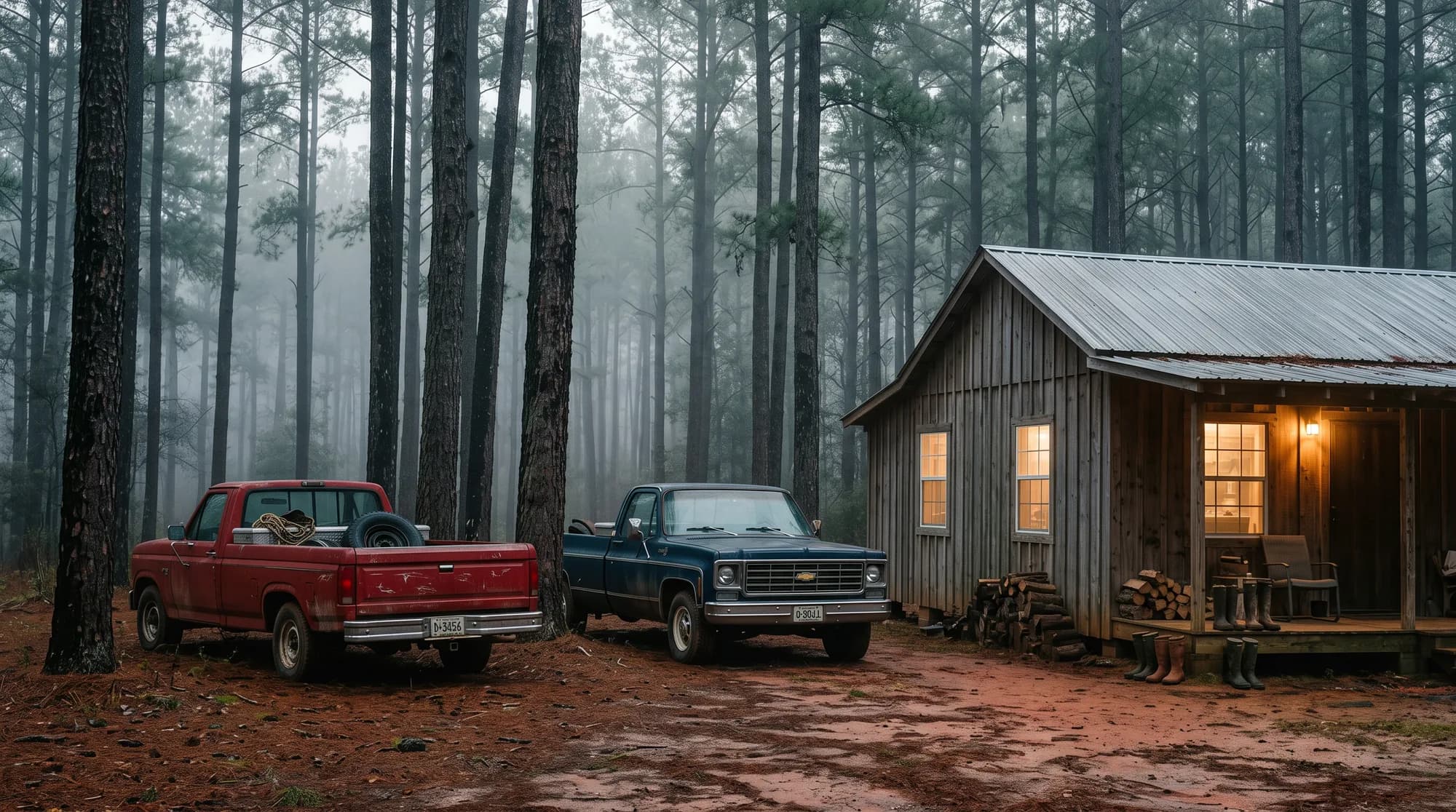
For hunting clubs
A hunting club is a roster in a spreadsheet, dues history in a checkbook, lease documents in a filing cabinet, and a stand map in somebody's head. That works until the person holding it all stops. ClubOS is the version that survives your own turnover.
From
$49/mo
Up to 25 members
On dues
5%
Processing included
Migration
We do it
By hand, not a CSV
Target launch
Colorado
01 NOV 2026
What an officer actually does
Club officers are elected to collect dues, map assigned areas, decide where stands go, run work days, hear grievances, and make sure members follow the rules. Software should make those five jobs smaller, not add a sixth.
Set the amount, set the date, bill installments, and know at a glance who has paid — instead of reconciling a checkbook against a memory in September.
Every member gets a defined area, recorded on one map that everyone sees. No two people claiming the same bottom on opening morning.
New stands are proposed, checked against existing ones for spacing, approved by an officer, and added to the camp map — the safety rule clubs already run on paper.
Schedule them, track who showed up, and apply credits automatically. The single most common source of resentment in a club, settled with a record.
Bylaws, guest policy, legal-buck criteria, and grounds for termination in one versioned place — signed by every member, not stapled to a noticeboard.
ClubOS
Applications through to harvest records, on one ledger the club owns.
Prospects apply, officers review, and every accepted member arrives identity- and license-verified before their first hunt.
Set the amount and the date; the platform bills, chases, and reconciles. Non-payment rules apply themselves.
Capacity per stand, per area, per day. Rest rotations so the best ground isn't hunted flat by Thanksgiving.
Every stand carries the winds it actually hunts. Bookings that would blow a stand out get flagged before someone burns it.
Versioned, signed before access, and attached to the specific hunt — not a form remembered from August.
Term, renewal date, installment schedule, and the document itself in one place, billed on the dates the lease says.
Work-day calls, gate changes, and safety notices to the whole roster or one area. TCPA-compliant from day one.
Captured at check-out as a by-product of the hunt, not chased down in February when nobody remembers.
Published, not quoted
You should be able to work out what this costs without booking a call. Tiers are by roster size, and the percentage on dues already includes card processing.
$49per month
Up to 25 members on one lease.
$149per month
26–150 members across multiple tracts.
$349per month
150+ members, or a lease program managing clubs across many tracts.
Plus 5% on dues collected — inclusive of card processing. There is no separate processing line underneath it. The fee is passed through to the member at checkout, so a $1,000 due still collects $1,000 to the club and the member sees $1,050. Full pricing.
Migration
There is no import button for a filing cabinet. We do the conversion by hand, which is slow enough that we take clubs on in small numbers — so the club that asks early gets a season's head start on the one that waits.
Names, contact details, join dates, dues history, and standing — in whatever shape it currently exists.
Term, acreage, tracts, renewal date, installment schedule, and any conditions the landowner attached.
Every stand, its area, its access route, its productive winds, and who has been sitting it. This is usually the longest conversation and the most valuable one.
Each member confirms their own details, signs the current waiver, and verifies their license. That is the moment the records become real rather than inherited.
Dues, waivers, and stand assignments through one season, end to end. If it hasn't earned its place by February, it hasn't earned its place.
The landowner relationship
The reason a landowner leases to your club rather than to strangers is that you vouch for your members. Everything below is how that vouching becomes provable.
| What | Landowner sees | Why it matters |
|---|---|---|
| Who has access | Verified members, current | The list is never stale, because it is the same list that grants access |
| Waivers | Signed and current | Access is gated on it — an unsigned member cannot be granted access at all |
| Licenses & hunter education | Verified per member | Checked once at the platform rather than four documents by torchlight |
| Lease status | Term, renewal date, payments | No January surprise about whether the lease was actually paid |
| Harvest | What was taken, and where | The record that justifies next year's terms — in either direction |
| Club finances | No | Internal dues, arrears, and disputes stay inside the club |
Club questions
Because the spreadsheet works right up until the person who maintains it stops. Every club we have talked to has the roster in a spreadsheet, dues history in a checkbook, the lease in a filing cabinet, and the stand map in somebody's head. That is fine while that person is healthy and interested, and it is a crisis the year they aren't. Getting it into one system is mostly about the club surviving its own turnover.
Somebody has to convert the roster, the dues history, the lease documents, and the stand map by hand — there is no import button for a filing cabinet. That somebody is us, not you. You hand over what you have, in whatever shape it is in, and we sit down with whoever holds the stand map. Most of the work is one long conversation, not a data-entry project you inherit.
$49 a month up to 25 members, $149 for 26 to 150, and $349 for larger clubs or lease programs running multiple clubs. On top of that, 5% on dues collected through the platform — and that 5% is inclusive of card processing, so there is no separate 2.9% plus 30 cents underneath it. The fee is passed through to the member at checkout, so a $1,000 due still collects $1,000 to the club.
They see what concerns their ground: who has access, that waivers are signed, that the lease is current, and what was harvested. They do not see your internal finances, your member disputes, or your dues arrears. The club stays the club.
Either, and clubs run both. Some assign areas for the season and let members book specific stands within their area; others open the whole property first-come with per-stand caps and rest rotations. The rules are yours; what the platform adds is that the rules are actually enforced rather than remembered.
It stops being a surprise. The lease document, its term, its renewal date, and its installment schedule live in one place, and the payments are billed on the dates the lease actually says. In the Southeast, where clubs negotiate and sign next season between January and April, knowing your own renewal date in November is worth more than it sounds.
Beta cohort, Colorado 2026
Three to five clubs run the first Colorado season with us end to end — roster, lease, and stand map converted by hand before opening day. Southeast clubs follow in early 2027, timed to when leases actually get signed. Tell us what you run and where.
Clubs are contacted within 24 hours by a person, not an email sequence.