
Access-edge private ground
Negotiated
Valley-bottom and trailhead-adjacent ground trades on the access it unlocks to public country behind it, rather than on its own acreage.
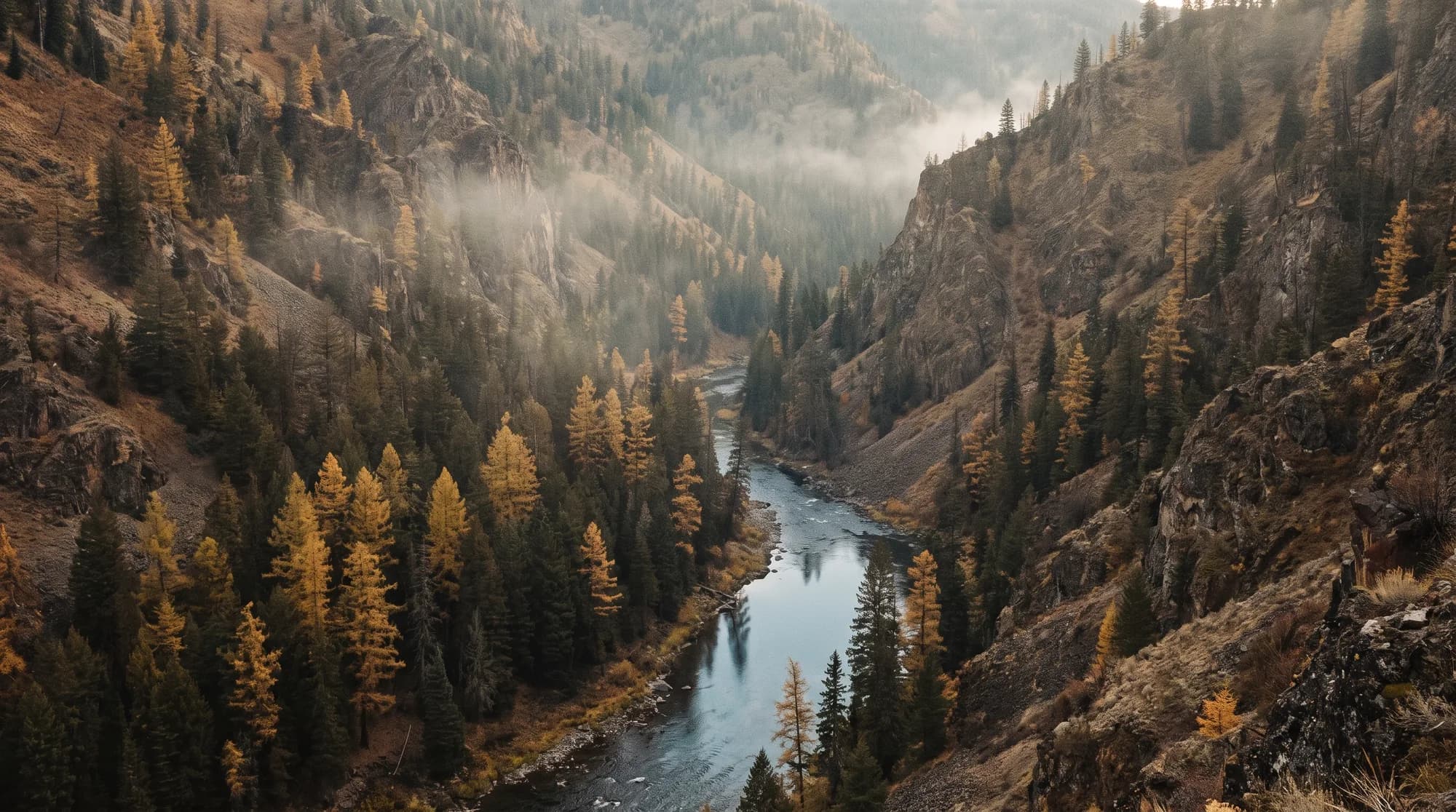
Reference only · Idaho
Idaho is the state that most clearly shows how allocation, not acreage, governs western access. Nonresident general tags are capped and go on sale on a fixed date, a defined share is set aside for hunters booking with a licensed outfitter, and the popular units are gone quickly. What you can hunt is decided months before you set foot on any ground.
Status
Not a launch region
Reference only
Nonresident tags
Capped
Sold on a set date
Outfitter set-aside
Yes
A defined share of tags
Terrain
Steep and timbered
Access is the constraint
Reference only
Idaho is not a launch region. It is included because its nonresident tag structure — capped, dated, and partly set aside for outfitted hunts — is the clearest example of how allocation shapes access.
Access reality
Before anything about a platform — this is the market as it exists today.
What it costs
Published 2026 market guidance, so a landowner can sanity-check what their ground is worth and a hunter can budget honestly. These are market figures, not HunterPass quotes.
Access-edge private ground
Negotiated
Valley-bottom and trailhead-adjacent ground trades on the access it unlocks to public country behind it, rather than on its own acreage.
Drop camp
$3,000 – $5,000
Packed in with stock and gear; you hunt on your own. Common in Idaho's wilderness country.
Fully guided elk
$5,000 – $7,500
Standard guided public-land hunt with a licensed outfitter.
Guided private or premium unit
$7,500 – $10,000
Controlled ground or premium units with materially higher success rates.
Season framework
The shape of the season, not the dates. Western seasons are set unit by unit and hunt code by hunt code, and publishing a plausible-looking date somebody plans a trip around would be worse than publishing none.
| Season | Window | Note |
|---|---|---|
| Elk · Archery | Late summer into September | The bugle season |
| Elk · Rifle | Autumn, by zone | Zone-specific dates |
| Deer | Autumn, by unit | — |
| Black bear | Spring and autumn | Two seasons |
Idaho structures elk hunting by zone and deer by unit, with dates and tag types varying substantially between them. Idaho Fish and Game publishes the current seasons and the nonresident tag sale dates, which matter more than the season dates for most out-of-state hunters.
Idaho Department of Fish and GameWhat you have to plan around
Not an exhaustive regulatory summary — the four things that most often catch out a club, a landowner, or a traveling hunter.
Nonresident general tags are capped and dated. For most out-of-state hunters the binding constraint is the sale date, not the season date, and missing it means hunting somewhere else.
A defined portion of nonresident tags is reserved for hunters booking with a licensed outfitter. That makes the outfitted route a distinct allocation channel, which is worth understanding before concluding that tags are simply unavailable.
Idaho licenses outfitters and guides through a dedicated board, with licenses tied to specific areas and activities. Verifying that an outfitter is licensed for the area you are hunting is not a formality.
Where private ground is the gateway to public country behind it, the written access agreement is doing the real work. Vague permission and an unmarked boundary is how a good arrangement becomes a trespass complaint.
Nothing on this page is legal advice or a substitute for current regulations. License requirements, season dates, and carcass-transport rules change every year and vary by unit — Idaho Department of Fish and Game is the source of truth.
What you can hunt
Idaho questions
Because they are capped and sold on a fixed date rather than issued through a draw for the general seasons. The total is limited, a share is set aside for outfitted hunts, and the popular zones sell out fast. Plan around the sale date, not the season.
It can, because a defined share of nonresident tags is allocated to outfitted hunts. That is a separate pool from the general nonresident tags. Whether it is worth the cost depends entirely on the hunt — but it is a genuine allocation difference, not a marketing claim.
No. Idaho is not a launch region and we have no ground there. This page exists as reference material.
Other launch states
Reference only
Landowners and clubs are contacted within a day. Hunters hear from us when the region actually opens — and not before.