
E-PLUS authorization
Market-priced
Set by what the unit and the season are worth. Premium units command substantially more, and the market is well enough established that brokers work in it full time.
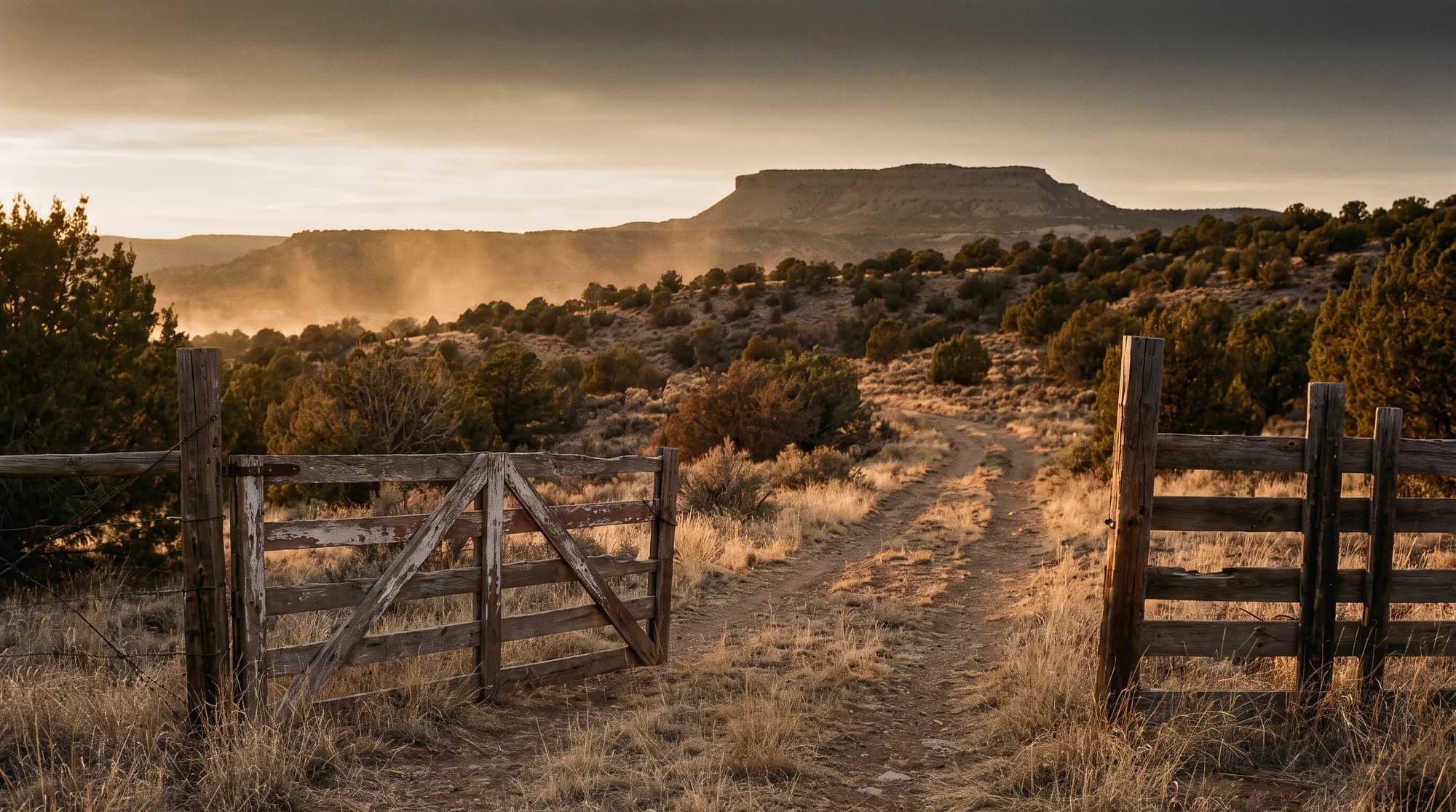
Reference only · New Mexico
New Mexico's Elk Private Land Use System is the most explicit landowner-tag economy in the United States. The state issues private-land elk authorizations to qualifying landowners, and those authorizations can be sold, traded, or bartered — a hunter buys one, then uses it to purchase a private-land elk license. It is a real market in a real asset, and almost all of it is administered on paper.
Status
Not a launch region
Reference only
Program
E-PLUS
Elk Private Land Use System
Zones
Three
Primary · Special · Secondary
Authorizations
Transferable
Sold, traded, or bartered
Reference only
New Mexico is not a launch region. Its E-PLUS system is the most openly traded landowner-tag economy in the country, and the single best illustration of why this ground needs real records.
Access reality
Before anything about a platform — this is the market as it exists today.
What it costs
Published 2026 market guidance, so a landowner can sanity-check what their ground is worth and a hunter can budget honestly. These are market figures, not HunterPass quotes.
E-PLUS authorization
Market-priced
Set by what the unit and the season are worth. Premium units command substantially more, and the market is well enough established that brokers work in it full time.
Ranch lease with authorizations
Negotiated
Many ranches lease the ground and the authorizations together, which is where the value of a New Mexico property concentrates.
Guided private-land elk
$7,500 – $15,000
Guided hunts on controlled ground, often bundled with the authorization.
Secondary zone, over the counter
License cost
Where private-land licenses are unlimited, the constraint is permission from the landowner rather than the tag.
Season framework
The shape of the season, not the dates. Western seasons are set unit by unit and hunt code by hunt code, and publishing a plausible-looking date somebody plans a trip around would be worse than publishing none.
| Season | Window | Note |
|---|---|---|
| Elk · Archery | September | The rut |
| Elk · Rifle | Autumn, by hunt code | Multiple short seasons |
| Mule deer | Autumn, by unit | — |
| Pronghorn | Late summer into autumn | Largely private-land |
New Mexico structures big-game hunting by hunt code, and the dates, weapon, and sex are set per code rather than statewide. The Department of Game and Fish publishes the current rules; E-PLUS landowner applications run on their own annual deadline in early January.
New Mexico Department of Game and FishWhat you have to plan around
Not an exhaustive regulatory summary — the four things that most often catch out a club, a landowner, or a traveling hunter.
Primary allocates on an acreage formula, Special is decided ranch by ranch, and Secondary issues unlimited over-the-counter private-land licenses. Which zone a property sits in changes what it is worth more than almost anything else about it.
Because they can be sold, traded, or bartered, an authorization has real transferable value — and tracking who holds which one, for which unit and season, is a records problem with money attached.
Landowners apply to participate on an annual cycle with an early-January deadline. Missing it costs a full year of allocation, which for a qualifying ranch is a substantial sum.
Eligibility rests on land size, elk populations, and habitat management potential. A large property with no elk and no habitat work does not qualify the way its acreage might suggest.
Nothing on this page is legal advice or a substitute for current regulations. License requirements, season dates, and carcass-transport rules change every year and vary by unit — New Mexico Department of Game and Fish is the source of truth.
What you can hunt
Read more about
New Mexico questions
The Elk Private Land Use System — New Mexico's program for distributing a share of the state's elk hunting opportunity to qualifying private landowners as authorizations. A hunter acquires an authorization from a landowner and uses it to buy a private-land elk license.
Yes. They can be sold, traded, or bartered, which is what makes New Mexico's the most openly traded landowner-tag market in the country. There is an established broker business built entirely around it.
In the Primary zone authorizations are issued to landowners on an acreage-based formula. In the Special zone they are issued ranch by ranch. In the Secondary zone private-land elk licenses are available over the counter in unlimited number, so the landowner's permission — not the tag — is the constraint.
No. New Mexico is not a launch region. It is on this map because E-PLUS is the clearest example anywhere of landowner tags as a tradeable asset, and of how much of that trade still runs on paper.
Other launch states
Reference only
Landowners and clubs are contacted within a day. Hunters hear from us when the region actually opens — and not before.