
Upland pine and cutover
$8 – $15 per acre
Working timber ground away from the river systems. Leased on acreage, with the value in room rather than density.
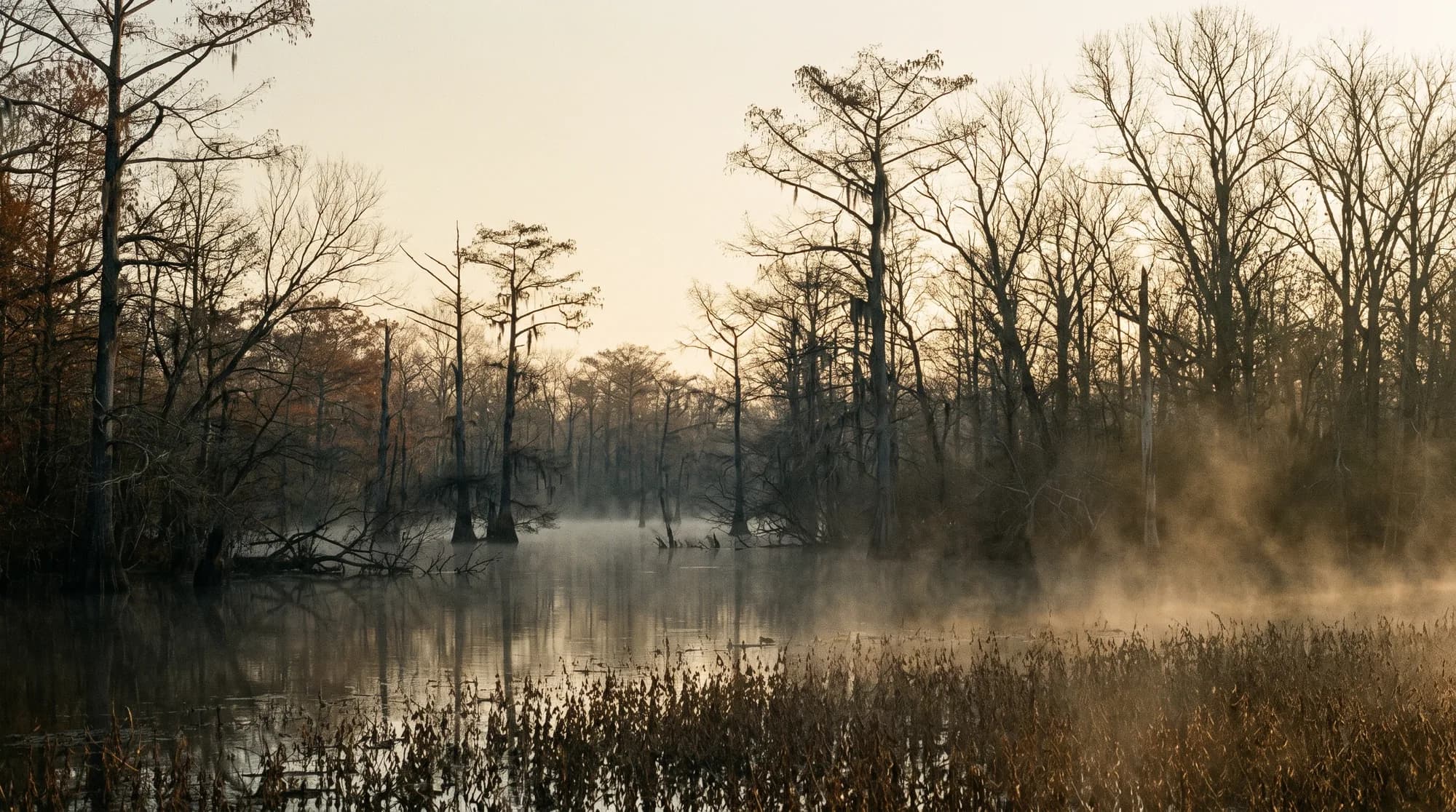
Opening 2027 · Mississippi
In Mississippi the word is camp, not club, and the institution is older than most of the software anyone has tried to sell it. Camps here hold ground for generations, run on elected officers and a members' meeting, and price their access against Delta and river-bottom ground that is among the most valuable leased hunting in the South.
Access opens
2027
Lease-signing window
Typical lease
$8 – $25/ac
Most of the state
Delta & bottoms
$30 – $50+/ac
Prime ground
Camp model
Member-run
Officers, dues, work days
Opening 2027
Mississippi's Delta and river-bottom ground is some of the most valuable leased hunting in the Southeast — and the hunting-camp tradition here is genuinely old.
Access reality
Before anything about a platform — this is the market as it exists today.
What it costs
Published 2026 market guidance, so a landowner can sanity-check what their ground is worth and a hunter can budget honestly. These are market figures, not HunterPass quotes.
Upland pine and cutover
$8 – $15 per acre
Working timber ground away from the river systems. Leased on acreage, with the value in room rather than density.
Mixed hardwood, statewide typical
$15 – $25 per acre
The range most of the state actually transacts in, for whitetail with turkey included.
Delta & river bottom
$30 – $50+ per acre
Prime agricultural-edge and bottomland ground. The premium reflects deer quality and consistency, not tract size.
Improved camps
+30 – 50%
A lease including a camp house, food plots, maintained roads, established stands, and processing facilities commands a substantial premium over bare-land equivalents.
Season framework
The published framework. Dates shift by unit, zone, and weapon every year — confirm with the agency before you plan around any of it.
| Season | Window | Note |
|---|---|---|
| Deer · Archery | Opens early October | Zone-dependent |
| Deer · Primitive weapon | November and January splits | — |
| Deer · Gun | Mid-November through January | With and without dogs, by zone |
| Turkey · Spring | March into May | — |
| Waterfowl | Federal framework, set annually | — |
Mississippi structures deer season by zone — Delta, Northeast, Hills, and Southeast — with different dates and different antler regulations in each. Mississippi Department of Wildlife, Fisheries, and Parks publishes the current zone map and dates.
Mississippi Department of Wildlife, Fisheries, and ParksWhat you have to plan around
Not an exhaustive regulatory summary — the four things that most often catch out a club, a landowner, or a traveling hunter.
Mississippi sets legal-buck criteria by zone, and the criteria are specific enough that members genuinely need them to hand in the stand. Attaching the rule to the booked stand is more reliable than a rule sheet nobody reread since August.
Officers are elected to collect dues, assign areas, decide stand placement, hire and pay maintenance, hear grievances, and enforce rules. Every one of those functions produces a record that currently exists only as a memory or a paper note.
Mississippi operates CWD management zones with supplemental-feeding restrictions and carcass-transport rules inside them. Zones are reviewed and redrawn between seasons.
Deer hunting with dogs is permitted in defined areas and prohibited in others. It changes how neighboring properties interact, and it is a common source of friction between adjacent leases.
Nothing on this page is legal advice or a substitute for current regulations. License requirements, season dates, and carcass-transport rules change every year and vary by unit — Mississippi Department of Wildlife, Fisheries, and Parks is the source of truth.
What you can hunt
Mississippi questions
Roughly $8 to $25 per acre across most of the state. Prime Delta and river-bottom ground runs $30 to $50 per acre and higher — that premium is about deer quality and consistency rather than tract size. Leases that include a camp house, food plots, and established stands run 30 to 50 percent above bare-land equivalents.
Mostly vocabulary and age. Mississippi camps are the same structure — a group holding a lease, electing officers, collecting dues, assigning areas — but the tradition is older and the social bonds are usually deeper. Camps here often hold the same ground for generations, which means the institutional knowledge is correspondingly harder to hand over.
Agricultural edge, bottomland hardwood, and water produce deer that upland pine ground does not, and the lease market prices that difference precisely. A hundred acres of river bottom next to a bean field is worth more than a thousand acres of recently cut pine, and everyone involved knows it.
Other launch states
Opening 2027
Landowners and clubs are contacted within a day. Hunters hear from us when the region actually opens — and not before.