
Lower-demand timber tracts
$2 – $8 per acre
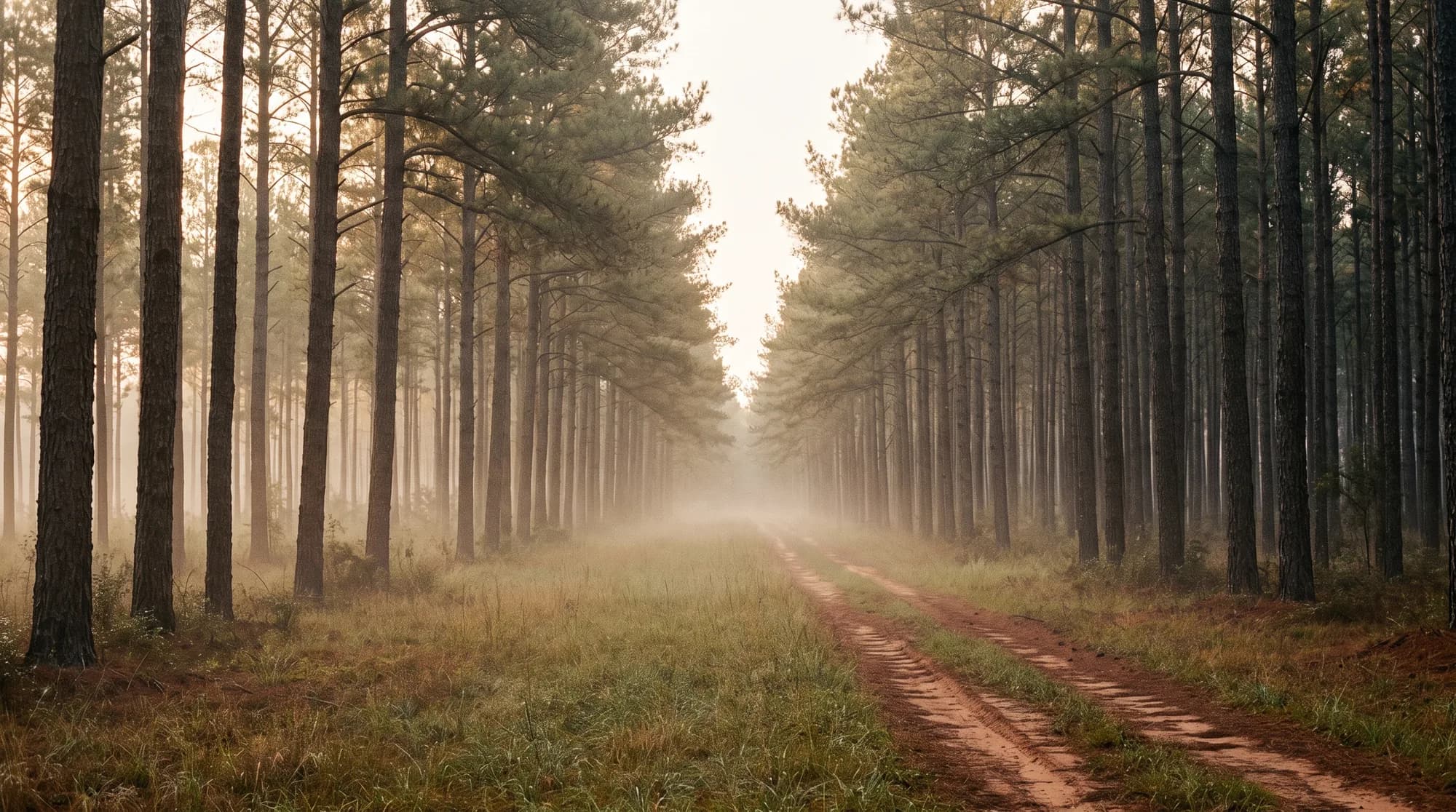
Large pine plantations with limited cover diversity and heavy rotation. Priced on acreage, and often leased sight-unseen by clubs that need room.
Opening 2027 · Georgia
Georgia is club country. Timber companies and family landowners lease hundreds of thousands of acres to organized hunting clubs, and those clubs — not individuals — are the unit that actually holds ground, collects dues, assigns stands, and signs the lease. If you want to hunt Georgia private land, you almost certainly join a club to do it.
Access opens
2027
Lease-signing window
Average lease
~$15/acre
Statewide
Lease range
$2 – $35+/ac
By county and cover
Firearms season
12 weeks
17 Oct – 10 Jan
Opening 2027
Georgia is a first-wave Southeast state. Clubs here negotiate and sign next season's leases between January and April.
Access reality
Before anything about a platform — this is the market as it exists today.
What it costs
Published 2026 market guidance, so a landowner can sanity-check what their ground is worth and a hunter can budget honestly. These are market figures, not HunterPass quotes.
Lower-demand timber tracts
$2 – $8 per acre
Large pine plantations with limited cover diversity and heavy rotation. Priced on acreage, and often leased sight-unseen by clubs that need room.
Statewide average
~$15 per acre
The number most Georgia clubs actually budget against. It moves with timber rotation age and food availability as much as with deer density.
Managed tracts with improvements
$20 – $35 per acre
Established food plots, maintained roads, and known stand locations. Leases with lodging, plots, stands, feeders, and processing run 30–50% above bare-land equivalents.
Creek bottom, high competition
$35 – $45 per acre
Small hardwood creek-bottom tracts with food plots, in counties where clubs are bidding against each other. The top of the Georgia market.
Season framework
The published framework. Dates shift by unit, zone, and weapon every year — confirm with the agency before you plan around any of it.
| Season | Window | Note |
|---|---|---|
| Deer · Archery | 12 September – 9 October 2026 | — |
| Deer · Primitive weapons | 10 – 16 October 2026 | — |
| Deer · Statewide firearms | 17 October 2026 – 10 January 2027 | — |
| Deer · Extended archery | 11 – 31 January 2027 | 29 counties only |
| Turkey · Private land | Opens 27 March | — |
| Turkey · Public land | Opens 3 April | — |
Georgia's private-land turkey opener runs a week ahead of public land, which matters for lease value in a way most pricing conversations skip. County-level exceptions apply to both deer and turkey — check the current Georgia DNR regulations.
Georgia Department of Natural ResourcesWhat you have to plan around
Not an exhaustive regulatory summary — the four things that most often catch out a club, a landowner, or a traveling hunter.
Dues due dates, guest policy, stand marking and spacing, work-day obligations, and grounds for termination are all set by the club and enforced by its officers. Clubs that run this well have a written constitution; clubs that run it badly have an argument every October.
Most clubs require an officer to approve a stand location before it goes up, mark it in hunter-orange tape, record it on the camp map, and enforce a minimum distance between stands. This is a safety rule first and a fairness rule second.
Georgia's recreational-use statute is written to encourage free public recreation. A club paying a lease fee is a commercial relationship, which is why serious lease programs require proof of club liability insurance and signed member waivers before the lease is executed.
Georgia requires harvest reporting for deer and turkey. A club that captures harvest at the point of booking has the data on hand rather than chasing members for it in February.
Nothing on this page is legal advice or a substitute for current regulations. License requirements, season dates, and carcass-transport rules change every year and vary by unit — Georgia Department of Natural Resources — Wildlife Resources Division is the source of truth.
What you can hunt
Georgia questions
The statewide average sits around $15 per acre, with a real range from about $2 to $35 or more. Lower-demand timber tracts start near the bottom, managed tracts with food plots and established stands reach $20 to $35, and small creek-bottom tracts in high-competition counties push $35 to $45.
Most clubs fill by referral first and classified listings second, with the state outdoor publication's classifieds being the traditional route. Expect to pay annual dues set by the board, attend a set number of work days, accept an assigned stand area, and sign the club's rules and a waiver before you hunt.
Your share of the lease payment first, then camp maintenance, road and food-plot work, insurance, and whatever the club has agreed to fund. Dues are set by the board and due by a fixed date; clubs commonly terminate membership and pull stand assignments for non-payment by the annual meeting.
Georgia is part of the 2027 Southeast wave. The decision that matters happens between January and April, when clubs negotiate and sign the next season's leases — that is the window we are building toward, with operating history from a full Colorado season behind us.
Other launch states
Opening 2027
Landowners and clubs are contacted within a day. Hunters hear from us when the region actually opens — and not before.